Las Tomas – Rabo de Buey aqueduct
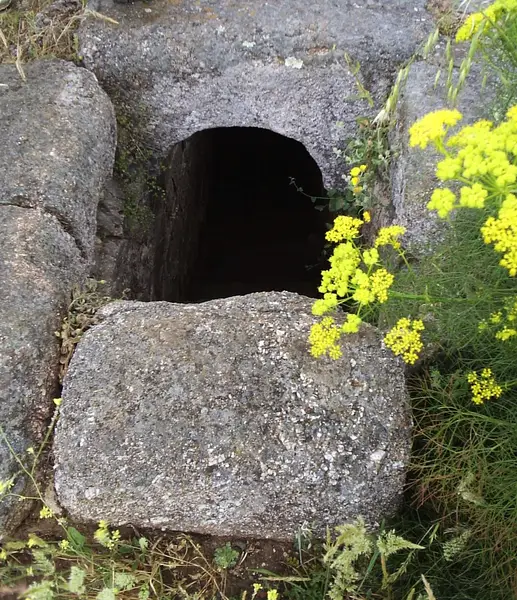
The catchment stretch of the third of the water supply systems of Augusta Emerita, known as Rabo de Buey–San Lázaro or Las Tomas, alongside those of Cornalvo and Proserpina. Unlike those, it did not depend on a dam: it took water from several streams and springs 5 to 6 km north and north-east of the city — Las Tomas, Valhondo and Casa Herrera — around Trujillanos.
- Type
- Aqueduct
- Preservation
- Foundations
- Protection
- —
- Coordinates
- 38.97053, -6.28581
- Photographs
- 1
What it is and what is left
The system consisted for the most part of underground conduits (specus), some stretches of which survive in excellent condition, and only resorted to arcades above ground to cross the valley of the river Albarregas at the gates of the city: there stands the so-called San Lázaro aqueduct, of which three piers and two arches remain. What is left of that monumental finish places the work in the 1st century AD and shows at least two building phases, evidence of repair and maintenance.
The mapping of the course is largely owed to the survey by Cees W. Passchier for the ROMAQ project (aqueduct no. 558). This point corresponds to the catchment area, not to the monumental urban stretch, which has a page of its own. Being a buried conduit, there is practically nothing to see on the surface except where the channel comes up. Location approximate, on the line of the conduit.
What each period left here
It reads downwards: each band is a period with fabric in this site, newest first, deepest last.
0 facts
1 photographs
Roman
This site has fabric from this period. Mérida has 57 more sites built in the same layer.
See the whole layer →
Below the deepest layer of each site is the ground itself: what has not been excavated yet, or what left nothing built. The catalogue only claims what is documented.
A short walk from here
Straight-line distances, worked out from the coordinates of each site.
Where this page comes from
- Ficha en Vici.org vici.org
- Itinerario II: El agua en Augusta Emerita — Guía Histórico-Arqueológica de las Ciudades Patrimonio de la Humanidad de España guiaarqueologicaciudadespatrimonio.org