San Lázaro aqueduct
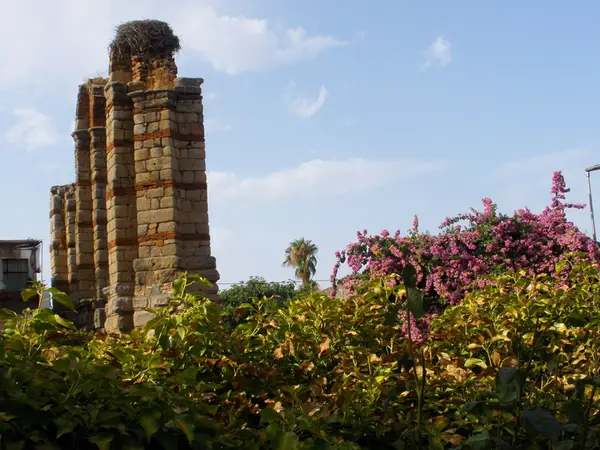
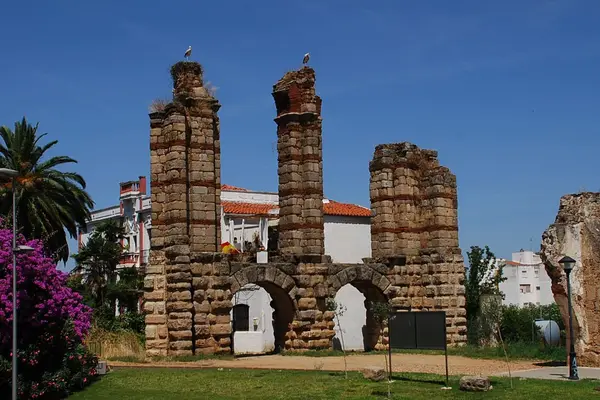
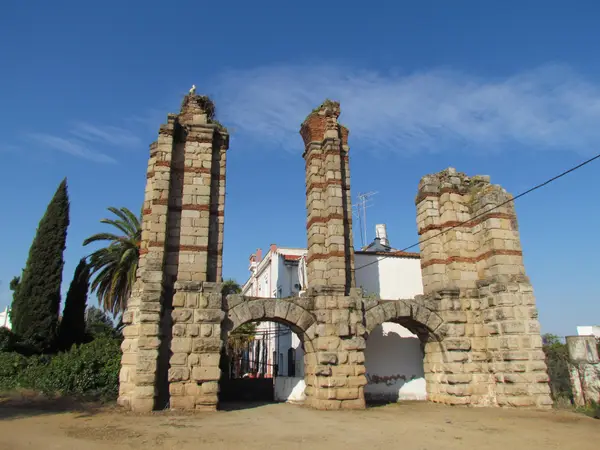
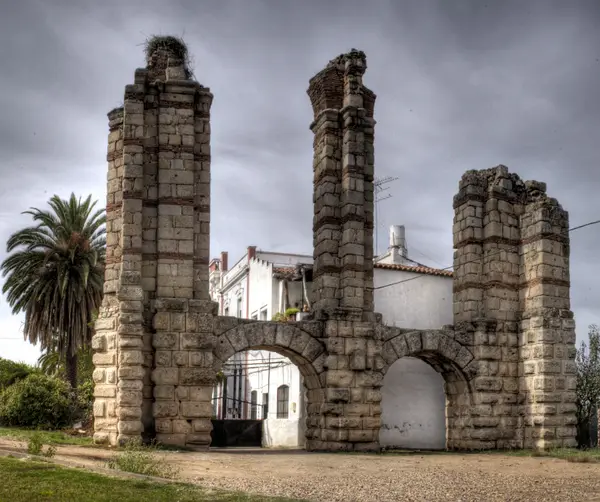
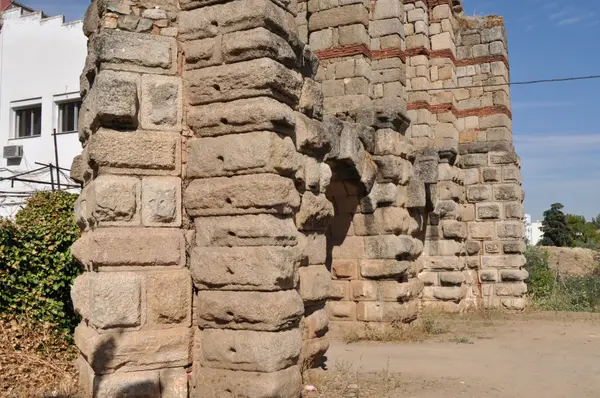
The Rabo de Buey–San Lázaro aqueduct was one of the three main conduits supplying water to Augusta Emerita (today's Mérida, capital of the Roman province of Lusitania). Originally built in the 1st century AD, it drew water from the springs of Las Tomas, Valhondo and Casa Herrera, to the north and north-west of the city. The conduit ran mostly underground, except where it had to cross the hollow of the river Albarregas, for which a great two-storey arcade was built. The lower level had arches of eleven voussoirs on granite ashlar piers, while the upper part combined ashlar and brickwork. The aqueduct ran for close to 4 km and reached about 15 m at its highest, with a specus — the inner channel — less than 80 cm wide. Of the Roman stretch only three piers and the arches between them survive. In the 16th century a new aqueduct was raised on part of the original fabric, reusing Roman material. Declared a national monument in 1912 and listed in 1985, it forms part of the Archaeological Ensemble of Mérida, inscribed on the UNESCO World Heritage List in 1993.
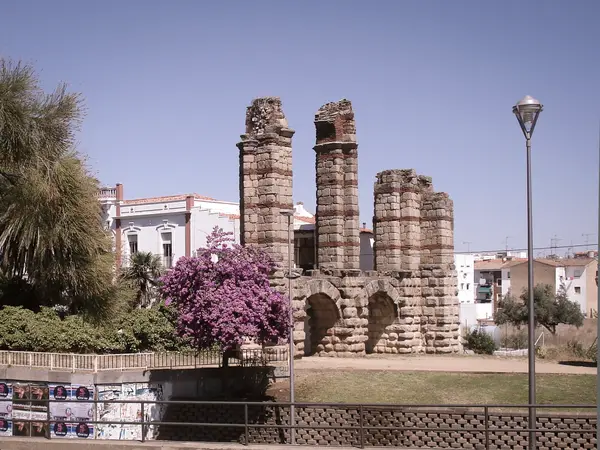
- Type
- Aqueduct
- Preservation
- Ruined
- Protection
- Listed · RI-51-0000113
- Listed
- 13/12/1912
- Coordinates
- 38.92296, -6.33540
- Photographs
- 10
What each period left here
It reads downwards: each band is a period with fabric in this site, newest first, deepest last.
1 facts
8 photographs
Roman
This site has fabric from this period. Mérida has 57 more sites built in the same layer.
See the whole layer →It has two names and neither is Roman: «Rabo de Buey» — ox tail — after the hill where the tank stood in which the water settled and cleared, and «San Lázaro» after a hermitage in the Paz district, demolished in the mid-20th century.
Turismo de Extremadura — Acueducto de Rabo de Buey
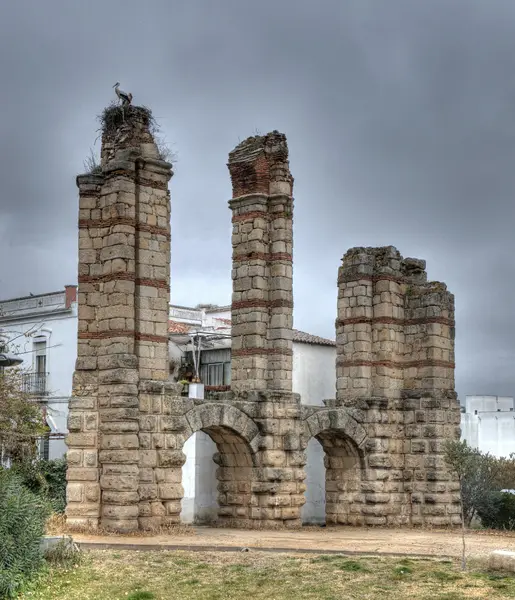
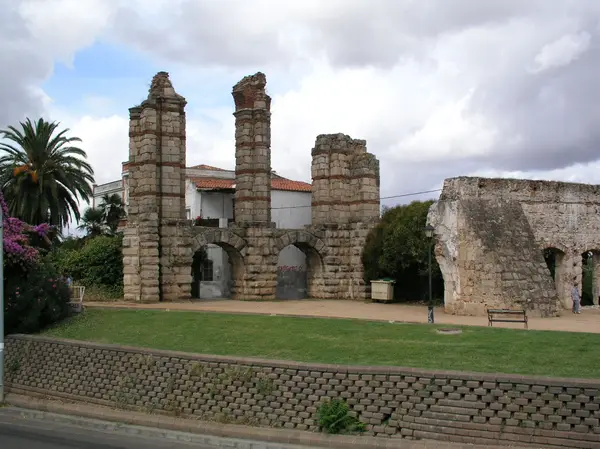
Below the deepest layer of each site is the ground itself: what has not been excavated yet, or what left nothing built. The catalogue only claims what is documented.
A short walk from here
Straight-line distances, worked out from the coordinates of each site.
Where this page comes from
- Acueducto de San Lázaro - Wikipedia es.wikipedia.org
- Acueducto de Rabo de Buey-San Lázaro | Consorcio Ciudad Monumental de Mérida consorciomerida.org
- Acueducto de San Lázaro, Mérida | ArteHistoria artehistoria.com