San Lázaro aqueduct: early modern stretch
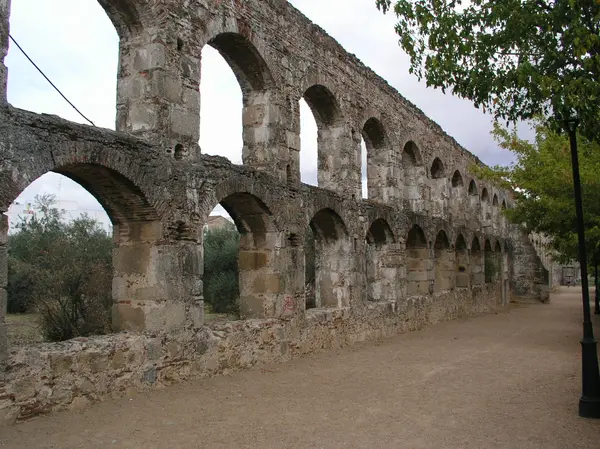
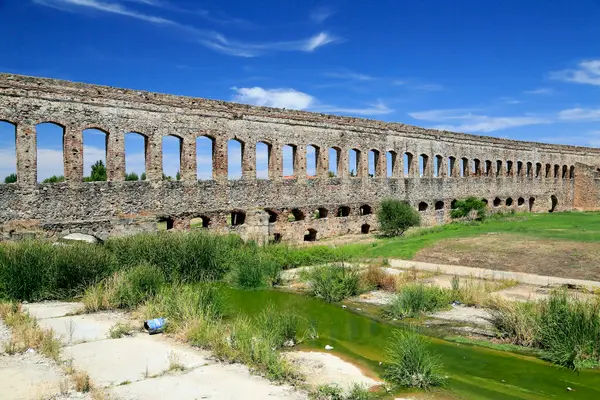
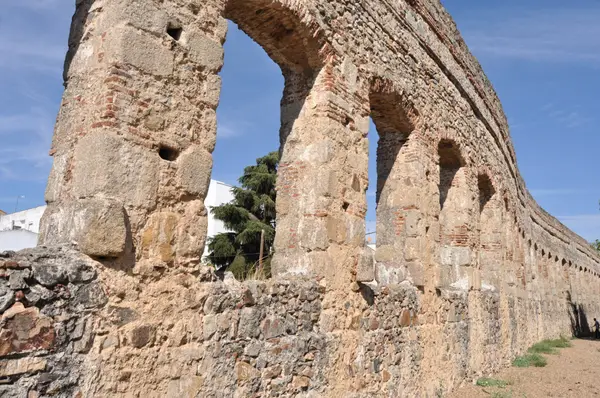
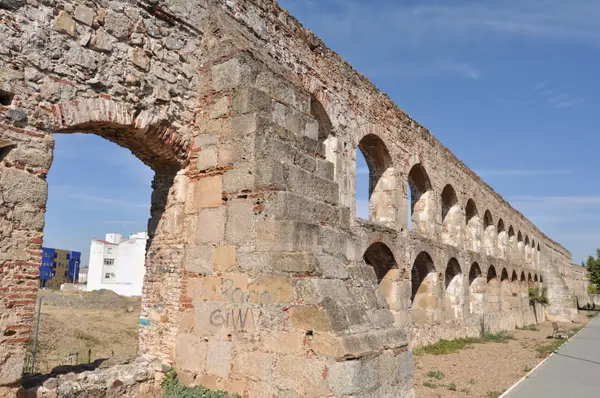
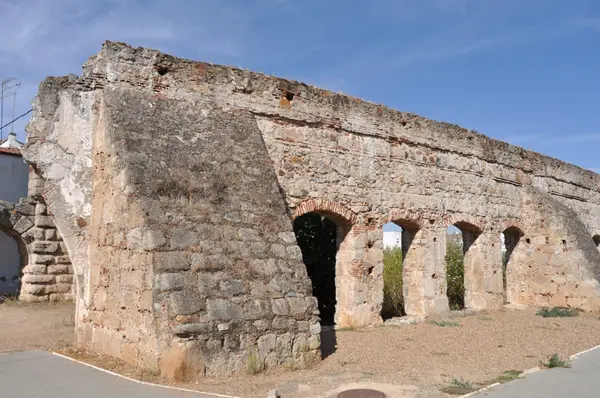
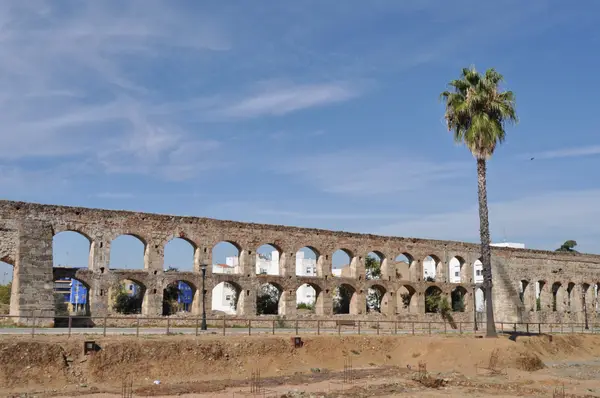
An elevated early modern stretch of the San Lázaro aqueduct, the only one of the Augusta Emerita conduits to have been in use, on and off, throughout its history. With the Roman arcade across the Albarregas valley gone — destroyed in the late Roman or early medieval period, which must have left the conduit abandoned through the Middle Ages — the city recovered its supply in the 16th century and a new crossing had to be built, on a course almost identical to the old one.
- Type
- Aqueduct
- Preservation
- Standing
- Protection
- Listed · RI-51-0005446
- Listed
- 02/09/1988
- Coordinates
- 38.92557, -6.33554
- Photographs
- 10
What it is and what is left
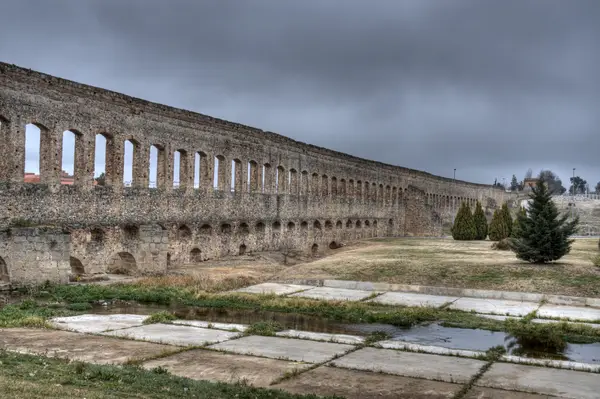
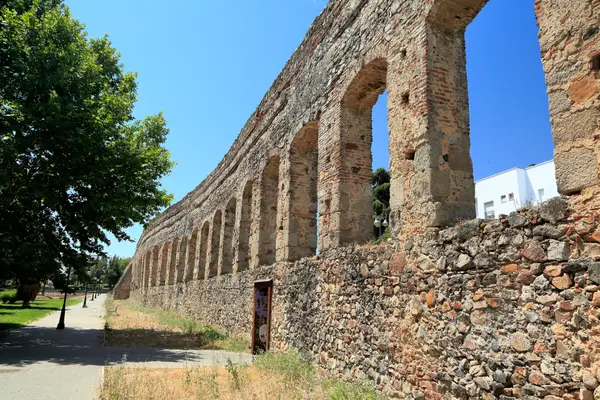
The work runs some 450 m, starts at the San Lázaro tank and consists of a narrow, continuous wall of dressed and rendered masonry, with the conduit embedded in the wall itself as a pipe of assembled ceramic sections. At intervals, very tall chimneys were raised to break the water pressure. The most spectacular stretch is near the Roman circus, where it reaches its greatest height: there, to relieve the load on the wall, openings were cut as segmental-arched windows, producing a triple arcade.
That some fragments preserve three different pipe sections shows how often it was repaired, whether for structural problems or because lime salts had clogged it. The municipal archive documents the process: the licence to levy 4,000 labourers «for the work of the pipe» and the accounts of the work begun in 1565, the repair orders of 1610, the files of 1819 and 1832, and the cleaning and return to service on a new route under mayor Pedro María Plano in 1889.
It survives in good condition, though it is no longer in use. It should not be confused with the three Roman piers of the same name, which have a page of their own. Location approximate, on the line of the conduit.
What each period left here
It reads downwards: each band is a period with fabric in this site, newest first, deepest last.
0 facts
0 photographs
Modern
This site has fabric from this period. Mérida has 1 more sites built in the same layer.
See the whole layer →0 facts
0 photographs
Early modern
This site has fabric from this period. Mérida has 8 more sites built in the same layer.
See the whole layer →Below the deepest layer of each site is the ground itself: what has not been excavated yet, or what left nothing built. The catalogue only claims what is documented.
What is told about this site
Cutting a pedestrian passage under the aqueduct revealed what it was carrying inside: one lead pipe and two more of ceramic, embedded in the wall.
Visitar Mérida — Acueducto de San LázaroThe aqueduct you see standing is not the Roman one: it is 16th-century work, raised with stone from the old one, which had been all but destroyed. Of the Roman aqueduct only three piers remain.
Acueducto de San Lázaro — WikipediaPhotographs
A short walk from here
Straight-line distances, worked out from the coordinates of each site.