San Lázaro baths
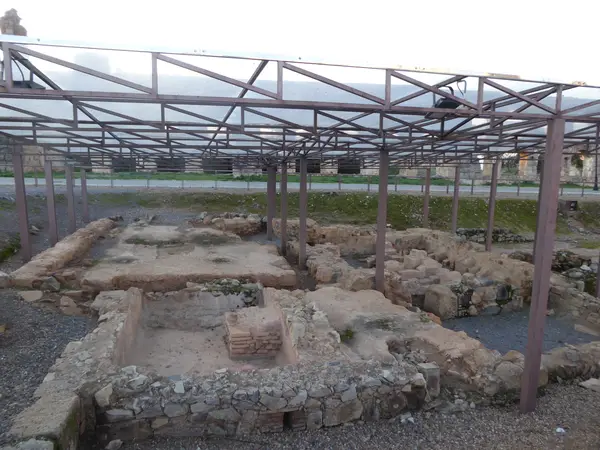
A Roman public bath complex beside the San Lázaro aqueduct (also called Rabo de Buey), on avenida Juan Carlos I in Mérida. Built in the early 2nd century AD over the remains of earlier industrial installations, these baths were in use until the 3rd century AD.
- Type
- Baths
- Preservation
- Foundations
- Protection
- Listed · RI-51-0000121
- Listed
- 13/12/1912
- Coordinates
- 38.92080, -6.33496
- Photographs
- 3
What it is and what is left
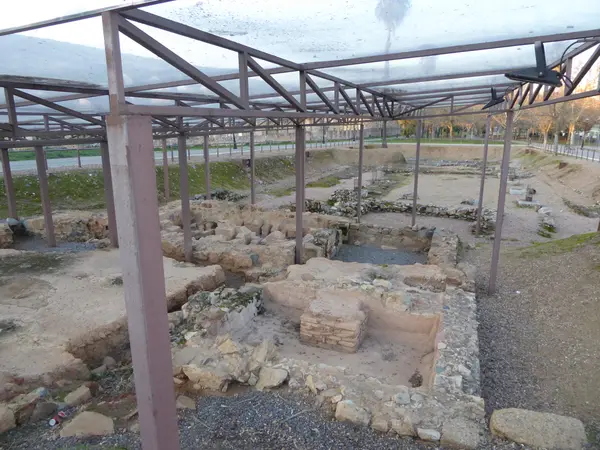
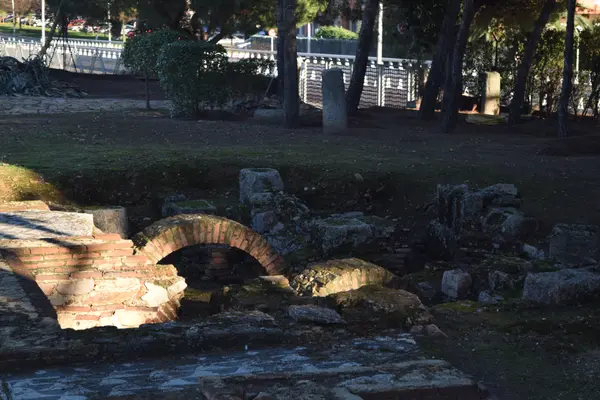
The complex had a large vestibule-changing room giving onto a steam room (sudatio), two hot pools (calidae) and a cold pool (frigidarium). Water came from the aqueduct next door through a channel connected to a distribution tank; waste water was discharged towards the river Albarregas (the Roman Barraeca). Outside there was a palaestra for exercise and a large open-air pool.
They form part of the Archaeological Ensemble of Mérida, declared a UNESCO World Heritage site in 1993, and are listed (reference RI-53-0000148). The remains can be seen freely from outside and have information panels. Their position, between the Roman circus and the San Lázaro aqueduct, suggests they may also have served the spectators who came to the chariot races.
What each period left here
It reads downwards: each band is a period with fabric in this site, newest first, deepest last.
3 facts
3 photographs
Roman
This site has fabric from this period. Mérida has 57 more sites built in the same layer.
See the whole layer →These baths were unknown: they lay forgotten and covered in earth until 2004, when they turned up a few metres from the circus, the aqueduct and the xenodochium.
Consorcio Ciudad Monumental de MéridaThe baths were raised in the early 2nd century on top of earlier industrial installations: the plot changed trade, from factory to bath house, and stayed in use until the 3rd century.
Consorcio Ciudad Monumental de MéridaThey were not only baths: the complex was completed by a palaestra, an open space for exercise, and a large open-air pool. There was also an area serving as a gymnasium where athletes trained.
Consorcio Ciudad Monumental de Mérida
Below the deepest layer of each site is the ground itself: what has not been excavated yet, or what left nothing built. The catalogue only claims what is documented.
A short walk from here
Straight-line distances, worked out from the coordinates of each site.
Where this page comes from
- Termas de San Lázaro | Consorcio Ciudad Monumental de Mérida consorciomerida.org
- Termas romanas de Augusta Emerita - Wikipedia es.wikipedia.org
- Acueducto y Termas de San Lázaro-Rabo de Buey | Turismo Mérida turismomerida.org