Arch of Trajan
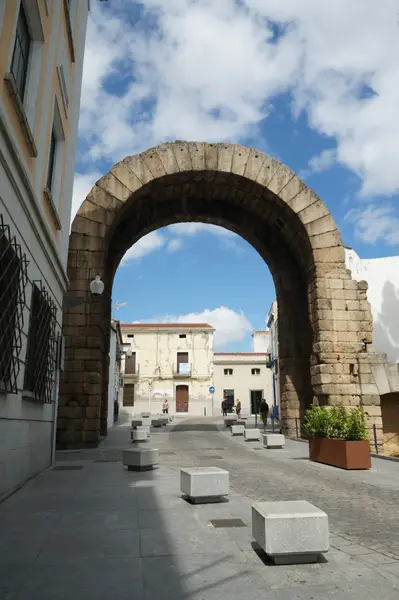
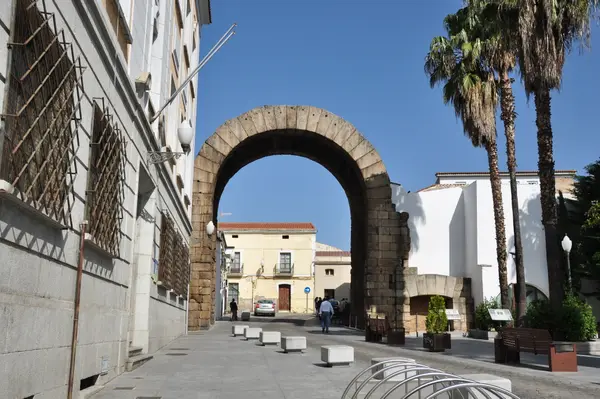
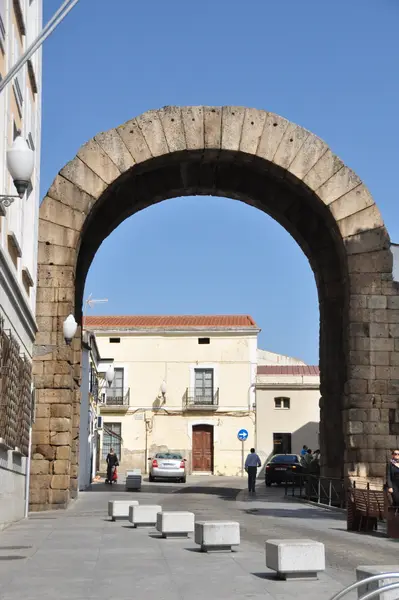
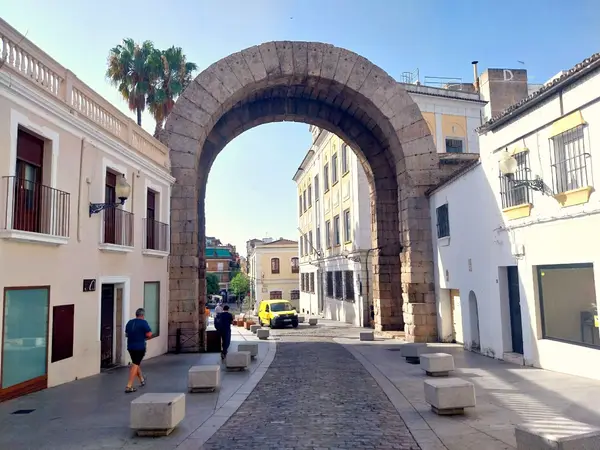
The Arch of Trajan is an imposing Roman monumental gateway standing on the Cardo Maximus of Augusta Emerita, the city's main north–south street. Despite its popular name it is not a triumphal arch dedicated to the emperor Trajan: it was built in the first half of the 1st century AD, probably under Tiberius. The name comes from local tradition in Mérida, not from any historical record.
- Type
- Arco monumental romano
- Preservation
- Standing
- Protection
- Listed · RI-51-0000117
- Listed
- 13/12/1912
- Coordinates
- 38.91783, -6.34643
- Photographs
- 10
What it is and what is left
It worked as the monumental entrance to the Provincial Forum of Lusitania, a great porticoed precinct with a temple of the imperial cult, linking the municipal forum with the provincial one, close to today's Plaza de la Constitución.
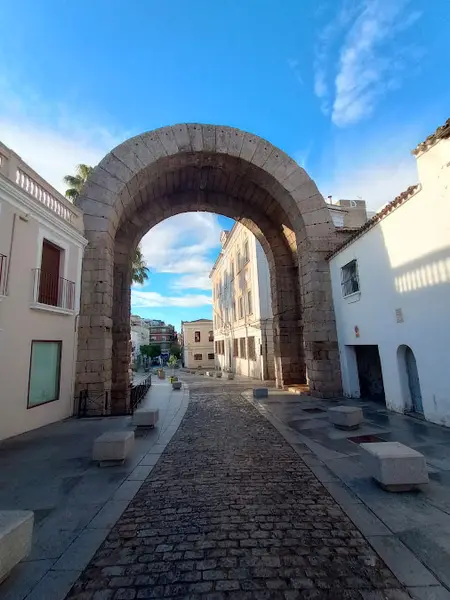
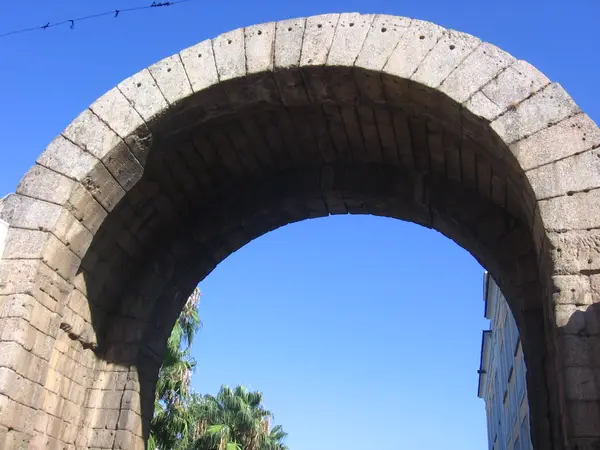
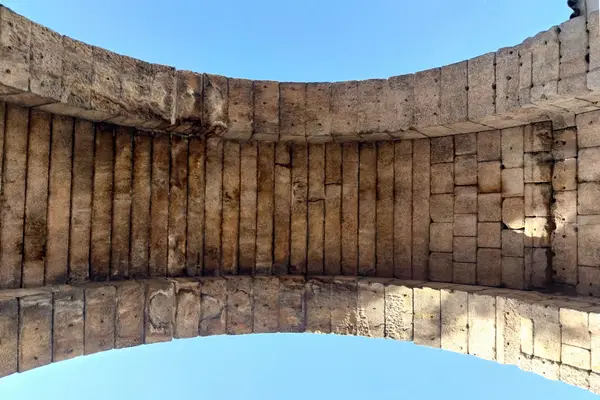
Built entirely of granite in regular ashlar with voussoirs 1.40 m high, it stands roughly 15 m tall (including some 2 m of buried base), with an opening of almost 9 m and 13 m across between buttresses. The clamp marks visible in the stone show it was originally faced with marble. Excavation around it has recovered bronzes, fragments of ornamental sculpture and inscriptions that confirm the existence of the provincial forum.
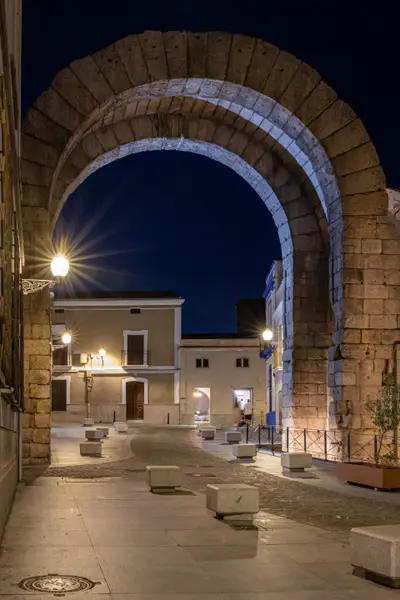
Declared a national monument in 1912 and part of the Archaeological Ensemble of Mérida, a UNESCO World Heritage site since 1993. What survives is the central arch; the side bays are gone. The monument is run by the Consorcio de la Ciudad Monumental de Mérida and is free to enter.
What each period left here
It reads downwards: each band is a period with fabric in this site, newest first, deepest last.
6 facts
8 photographs
Roman
This site has fabric from this period. Mérida has 57 more sites built in the same layer.
See the whole layer →The name has no basis: Trajan had nothing to do with it. The arch was raised in the 1st century, under Tiberius, and came to be called «of Trajan» after a commemorative inscription lost centuries ago.
Arco de Trajano (Mérida) — WikipediaNor is it a triumphal arch, though it was long believed to be one: it was the central bay of a monumental three-arched gate that gave access to the province's imperial cult precinct.
Arco de Trajano (Mérida) — WikipediaThe bare granite you see today was not the face of the monument: the holes spread across the ashlars and the remains found at its base show the whole arch was clad in marble.
Arco de Trajano (Mérida) — WikipediaIt was swallowed up among later houses. Work in the 1980s recovered the base of its northern side and the road it stood beside, and rebuilt the smaller arch on that side.
Extremadura: caminos de cultura — Arco de TrajanoNot one plaque has come down: nothing survives to tell us who built it, when exactly, or to whom it was dedicated. The name the whole city knows it by has not a single line of carved stone behind it.
Extremadura: caminos de cultura — Arco de TrajanoIt marked a boundary in the city: it was the end of the cardo maximus, the great north–south axis, and where the paving of the public square began. At 15 metres tall and 6 wide, you can see why somebody took it for a triumphal arch.
Consorcio Ciudad Monumental de Mérida
Below the deepest layer of each site is the ground itself: what has not been excavated yet, or what left nothing built. The catalogue only claims what is documented.
A short walk from here
Straight-line distances, worked out from the coordinates of each site.
Where this page comes from
- Arco de Trajano — Consorcio Ciudad Monumental de Mérida consorciomerida.org
- Arco de Trajano (Mérida) — Wikipedia es.wikipedia.org
- El Arco de Trajano de Augusta Emerita — Antonio Pizzo (2008), Dialnet dialnet.unirioja.es