Santa Clara church: the MNAR Visigothic collection
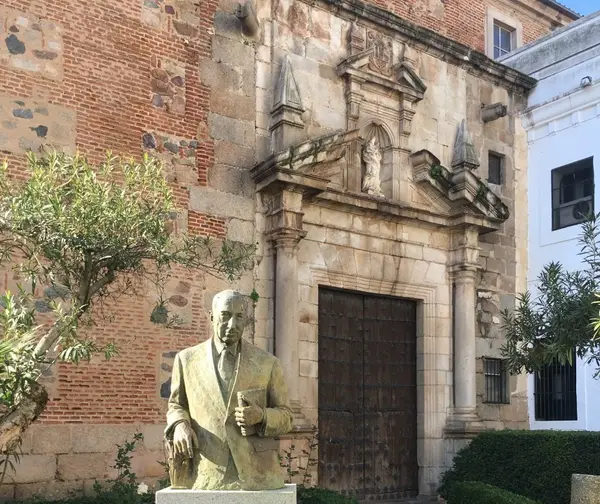
The church of the former convent of Santa Clara, in the historic centre of Mérida, which houses the Visigothic Collection of the National Museum of Roman Art: the most important body of Visigothic art in the Iberian Peninsula, with some 834 pieces. It is the answer to the question of where the late antique material excavated in the city ended up.
- Type
- Museo arqueológico
- Preservation
- Standing
- Protection
- —
- Coordinates
- 38.91711, -6.34688
- Photographs
- 11
What it is and what is left
The building also has a value of its own in the history of archaeology in Mérida: in 1838 it was handed over as the home of the Archaeological Museum of Mérida, the seed of today's National Museum of Roman Art, and even then it displayed Visigothic pieces. When the Roman collection moved in 1986 to Rafael Moneo's new building, the church was adapted to hold the Visigothic material provisionally. Four decades later it is still there, so what was meant as a temporary solution has become the collection's effective home.
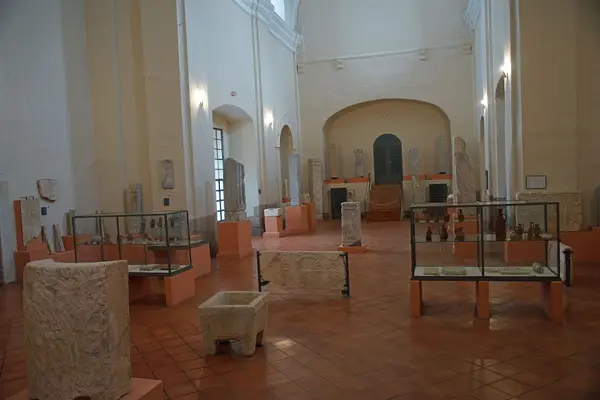
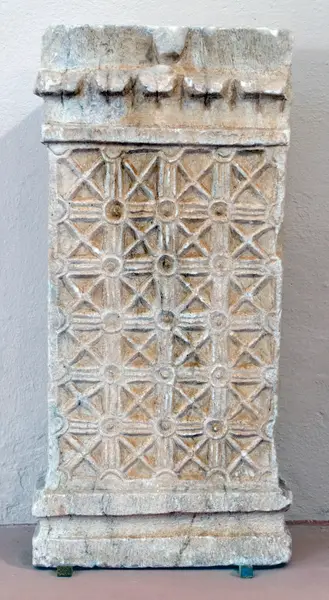
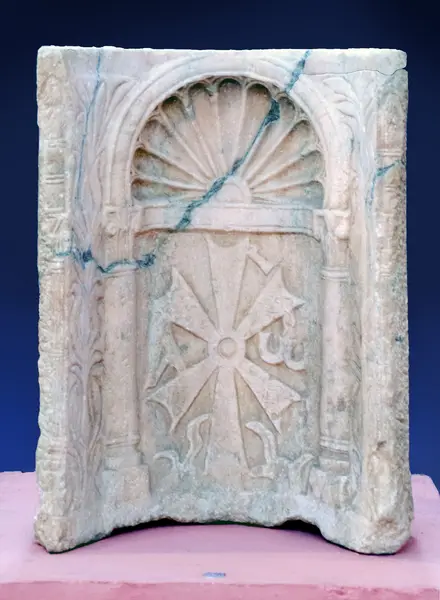
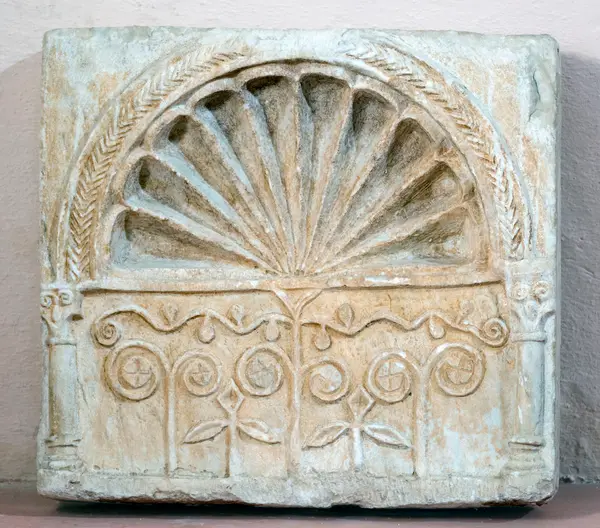
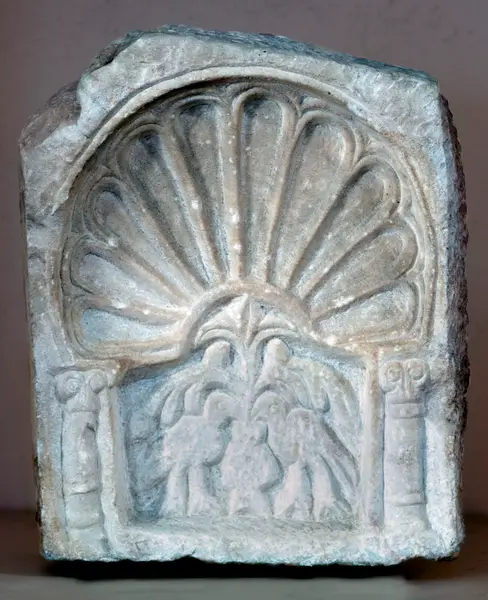
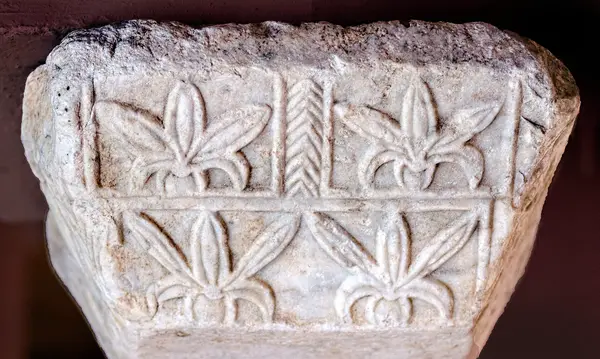
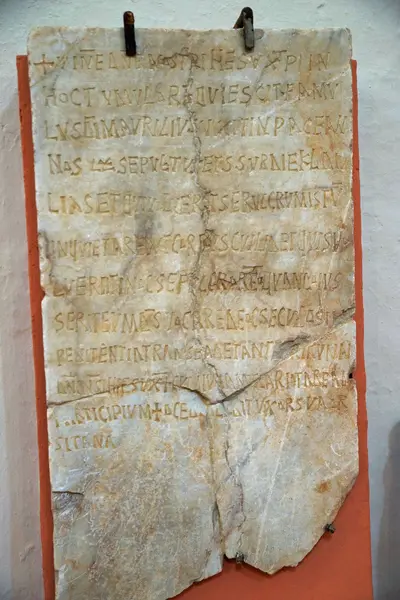
What is on show is above all architectural and decorative elements of the 6th and 7th centuries: pilasters, screens, niches, chancel panels and slabs with geometric and plant decoration in chip carving, most of them from Mérida itself and from sites nearby, among them the basilica of Casa Herrera. Brought together, they allow the interiors of the churches of the Visigothic capital to be reconstructed better than anywhere else.
It is visited in the nave of the church, with the MNAR's own opening hours and free entry.
Where the finds are
The Visigothic Collection of the National Museum of Roman Art: some 834 pieces of the 6th and 7th centuries (pilasters, screens, niches, chancel panels and chip-carved slabs), from Mérida and its surroundings, including material from the basilica of Casa Herrera.
What each period left here
It reads downwards: each band is a period with fabric in this site, newest first, deepest last.
2 facts
0 photographs
Early modern
This site has fabric from this period. Mérida has 8 more sites built in the same layer.
See the whole layer →The convent was founded neither by a noble nor by an order: it was raised in 1602 by a city doctor, Lope Sánchez de Triana, to house Poor Clares.
Iglesia de Santa Clara (Mérida) — WikipediaThe design of the church passed through four hands before it was built: García Carrasco drew it in 1615, Ordarza Zabala redid it in 1621, then Bartolomé González Montiel, and the work was carried out from 1622 by the masters Diego and Francisco Miguel, of Medellín.
Iglesia de Santa Clara (Mérida) — Wikipedia0 facts
0 photographs
Late Antique / Visigothic
This site has fabric from this period. Mérida has 7 more sites built in the same layer.
See the whole layer →Below the deepest layer of each site is the ground itself: what has not been excavated yet, or what left nothing built. The catalogue only claims what is documented.
What is told about this site
The rogue Estebanillo González worked on the building of the convent — the same man whose life gives its name to one of the great picaresque novels of the Spanish Golden Age.
Iglesia de Santa Clara (Mérida) — WikipediaThe collection was not put together by a museum: it starts in the Renaissance, when some of the city's notables began hoarding Visigothic pieces out of antiquarian taste. A good part of what is displayed comes from the palace of the duke of La Roca.
MNAR — Colección VisigodaThe star piece is the so-called Bishop's Chair, a niche-slab read as the back of an episcopal throne — though some argue it was in fact part of something baptismal.
MNAR — Colección VisigodaBefore holding Visigothic Mérida, this church was the home of the Archaeological Museum of Mérida: the building has been serving as a museum for over a century.
MNAR — Colección VisigodaPhotographs
A short walk from here
Straight-line distances, worked out from the coordinates of each site.
Where this page comes from
- Reabre en Mérida la colección visigoda más importante de España (Extremadura7días) extremadura7dias.com