National Museum of Roman Art (MNAR)
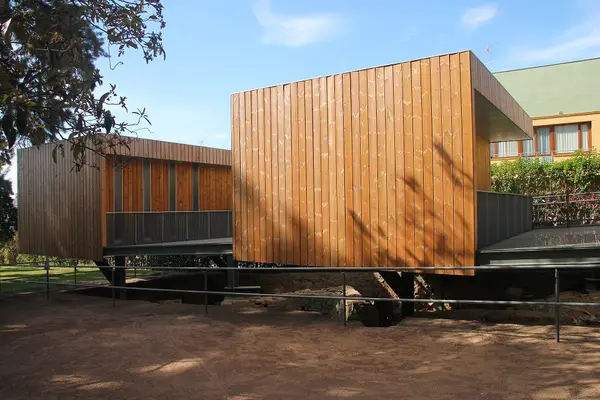
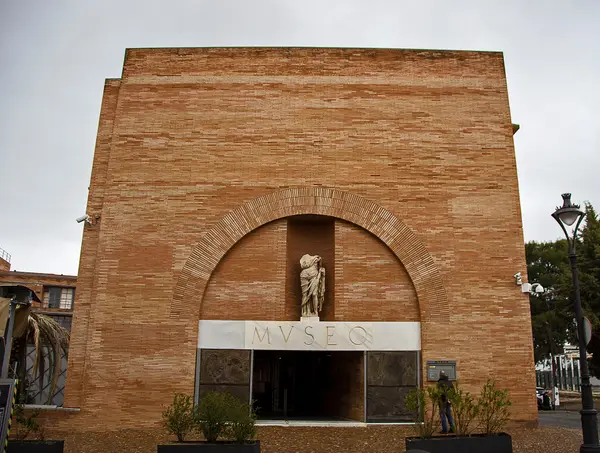
The most important museum of Roman art in Spain, opened in 1986 over remains left in situ from Augusta Emerita. The building was designed by Rafael Moneo (Pritzker Prize 1996) and forms part of the Archaeological Ensemble of Mérida, declared a UNESCO World Heritage site in 1993.
- Type
- Museo arqueológico
- Preservation
- Standing
- Protection
- Listed · RI-51-0001309
- Listed
- 01/03/1962
- Coordinates
- 38.91728, -6.34001
- Photographs
- 11
What it is and what is left
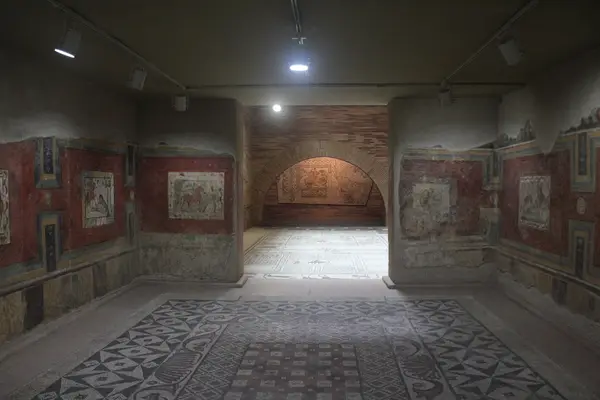
It holds more than 36,000 pieces, almost all of them from the old capital of Lusitania: the head of the veiled Augustus (marble, 1st century AD), the semi-colossal Ceres from the theatre, the Mosaic of the Charioteers (4th century, the largest surviving), the Missorium of Theodosius, and hundreds of Roman sculptures, inscriptions and wall paintings.
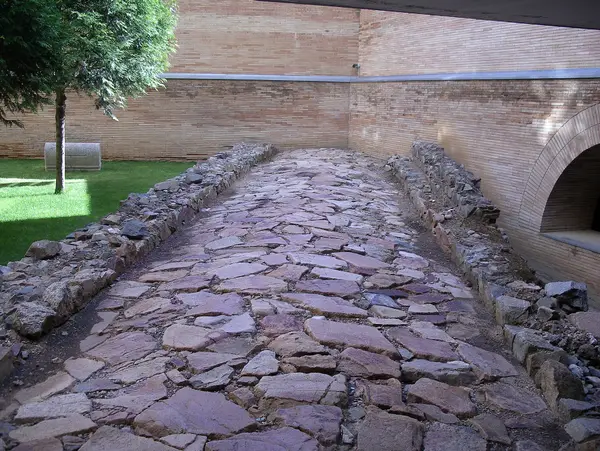
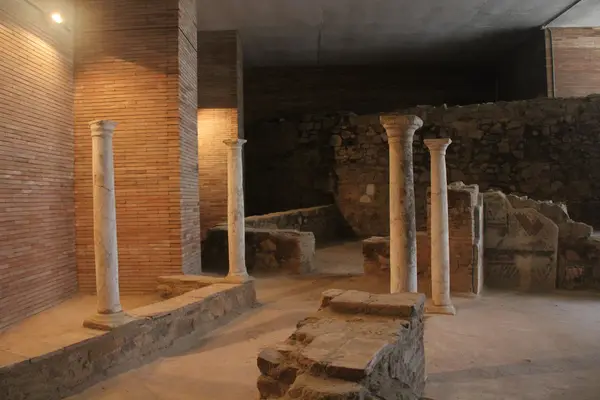
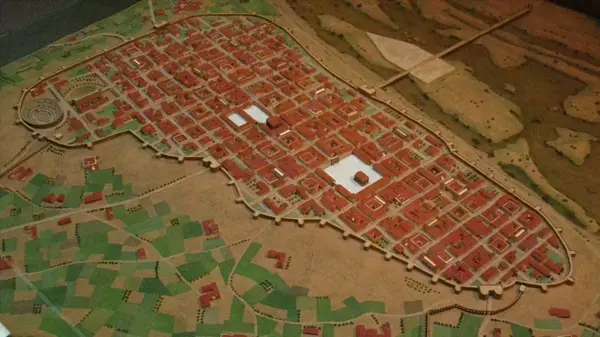
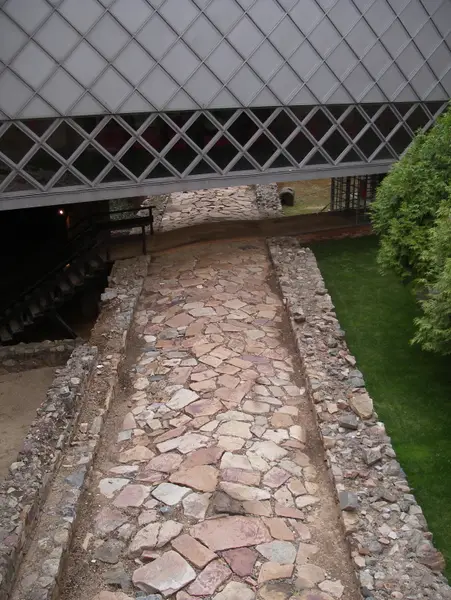
The underground crypt preserves remains of the Roman city in situ: a stretch of street, a stretch of the San Lázaro aqueduct, houses, graves from the eastern cemetery and an Early Christian building with frescoes. In February 2026 an extension costing €10.7M, designed by Moneo himself, was opened.
What each period left here
It reads downwards: each band is a period with fabric in this site, newest first, deepest last.
4 facts
8 photographs
Roman
This site has fabric from this period. Mérida has 57 more sites built in the same layer.
See the whole layer →You can go from the museum to the site without coming up to the surface: a tunnel under calle José Ramón Mélida links the building straight to the theatre and the amphitheatre.
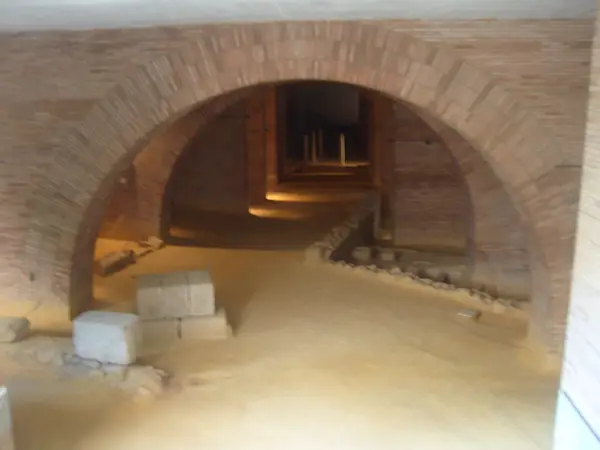
Arquitectura en Extremadura (COADE)Moneo laid out the galleries as a succession of parallel walls pierced by round arches, and the main arch reproduces the dimensions of the Arch of Trajan that still stands a few streets away.
Arquitectura en Extremadura (COADE)The museum was born of a birthday: it was created in 1975 for the two-thousandth anniversary of the city's founding, Moneo was commissioned to design a new building in 1979, and it opened in 1986.
Arquitectura en Extremadura (COADE)Leaving the remains found when the plot was dug exposed beneath the building, instead of removing them, made the MNAR a pioneer of the «in situ» museum, a solution copied later in other buildings.
Arquitectura en Extremadura (COADE)
Below the deepest layer of each site is the ground itself: what has not been excavated yet, or what left nothing built. The catalogue only claims what is documented.
A short walk from here
Straight-line distances, worked out from the coordinates of each site.
Where this page comes from
- Wikipedia: Museo Nacional de Arte Romano es.wikipedia.org
- ArchDaily: National Museum of Roman Art / Rafael Moneo archdaily.com
- Íscar Gamero (2018): Evolución museográfica del MNAR — Dialnet dialnet.unirioja.es
- Wikimedia Commons: Category:Museo Nacional de Arte Romano commons.wikimedia.org