Roman amphitheatre of Mérida
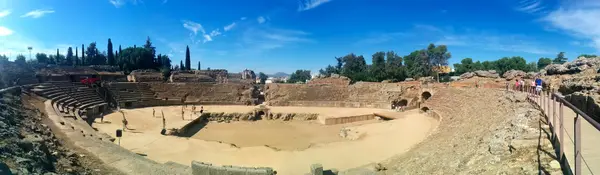
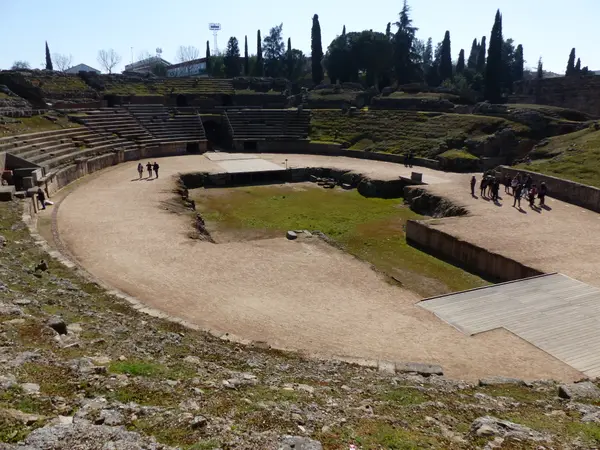
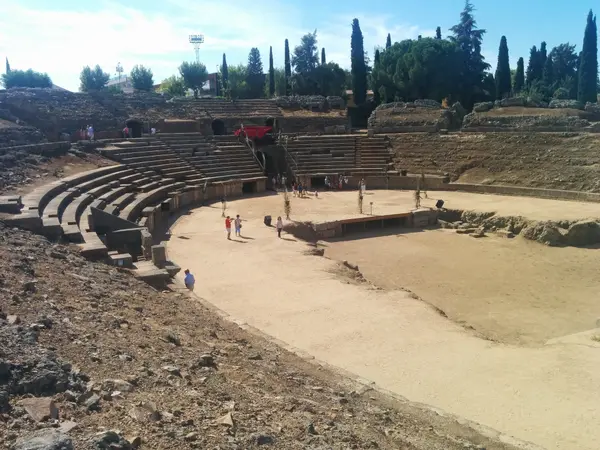
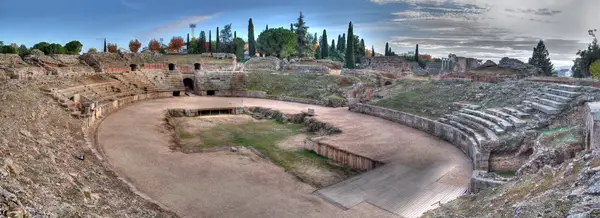
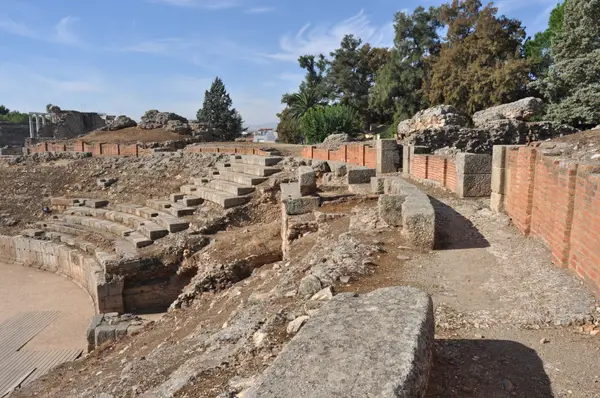
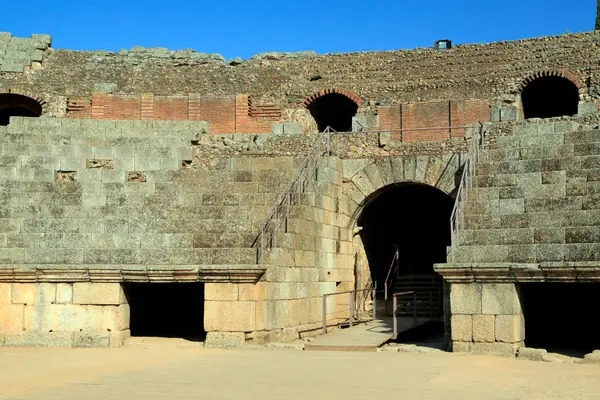
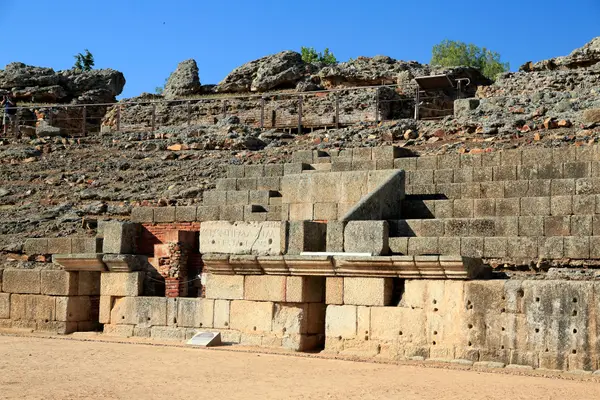
The Roman amphitheatre of Mérida is one of the major monuments of Augusta Emerita, capital of the Roman province of Lusitania. It opened in the year 8 BC, contemporary with the Roman theatre next door, with which it forms a great entertainment complex unique in Hispania. Elliptical in plan, its axes measure roughly 126 m (major) and 102 m (minor), with an arena of 64 x 41 m. The cavea, in three sectors (ima, media and summa), held some 14,000 seated spectators on 11 rows of seating, partly resting on the natural slope of the hill. It had 16 entrance gates and two boxes of honour on the minor axis: one for the magistrates and one for the sponsor of the games. The underground hypogeum, cross-shaped in plan, held the animal cages and the stage machinery. In one of the adjoining rooms signs have been identified of a cult of Nemesis, protective goddess of gladiators. The amphitheatre was used mainly for munera (gladiatorial combat) and venationes (wild beast hunts). Systematic excavation began in 1919 under J.R. Mélida and M. Macías. Declared a national monument in 1912, it has been a UNESCO World Heritage site since 1993 as part of the Archaeological Ensemble of Mérida.
- Type
- Amphitheatre
- Preservation
- Ruined
- Protection
- Listed · RI-51-0000108
- Listed
- 13/12/1912
- Coordinates
- 38.91617, -6.33793
- Photographs
- 20
What it is and what is left
Where the finds are
Sculpture, inscriptions and pottery from the amphitheatre excavations, within the collection of some 36,000 pieces the museum holds from the Mérida site.
What each period left here
It reads downwards: each band is a period with fabric in this site, newest first, deepest last.
5 facts
8 photographs
Roman
This site has fabric from this period. Mérida has 57 more sites built in the same layer.
See the whole layer →For centuries it was thought to be not an amphitheatre but a naumachia, an arena for mock naval battles: the great pit in the middle of the arena and the nearby aqueduct remains seemed to suggest it was flooded. The error was carried from the 16th century onwards and was not put right until the excavations begun in 1919.
Anfiteatro de Mérida — WikipediaThe central pit was not for water: it was covered with decking, and underneath were kept the animal cages and the stage material that came out into the ring.
Consorcio Ciudad Monumental de MéridaFrom the amphitheatre comes a plaque dedicated to Nemesis, the goddess invoked by those about to risk their lives in the arena; it is now in the National Museum of Roman Art.
Consorcio Ciudad Monumental de MéridaIn 1979 four fragments of wall painting turned up here, reused in a late tomb: they show venatio scenes, with specialist hunters facing the beasts, down to the detail of their clothing. They are on display in the National Museum of Roman Art.
MNAR — Pinturas del AnfiteatroWe know it opened in 8 BC because the inscriptions found in the building say so: it is one of the few exact dates known for the Augusta Emerita of the foundation years.
Anfiteatro de Mérida — Wikipedia
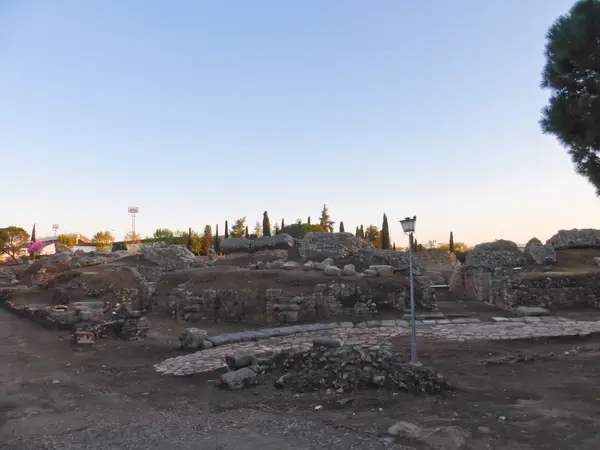
Below the deepest layer of each site is the ground itself: what has not been excavated yet, or what left nothing built. The catalogue only claims what is documented.
A short walk from here
Straight-line distances, worked out from the coordinates of each site.
Where this page comes from
- Anfiteatro de Mérida — Wikipedia es.wikipedia.org
- Anfiteatro Romano — Consorcio Ciudad Monumental de Mérida consorciomerida.org
- El anfiteatro de Mérida — Lucius Spiculus lucius-spiculus.com