Roman theatre of Mérida
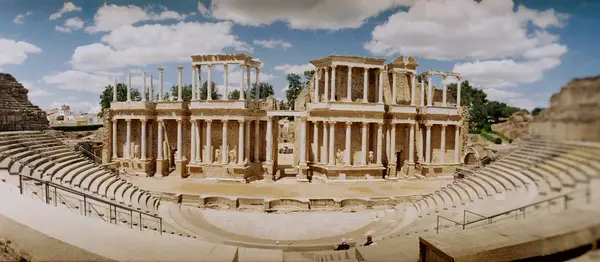
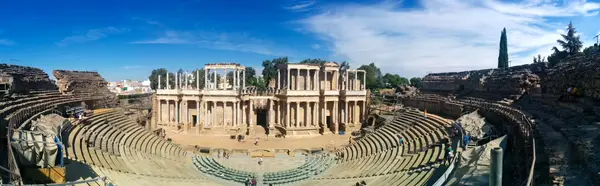
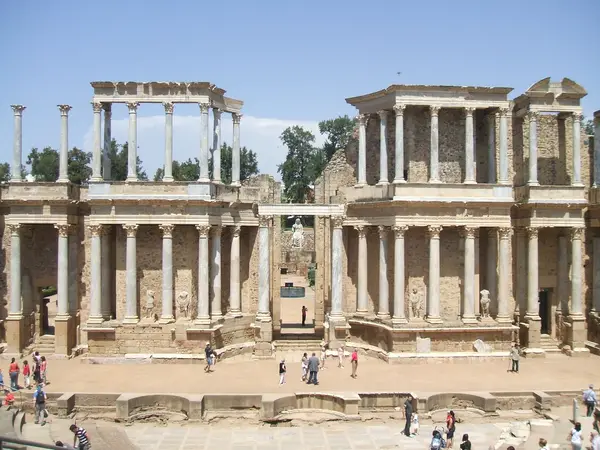
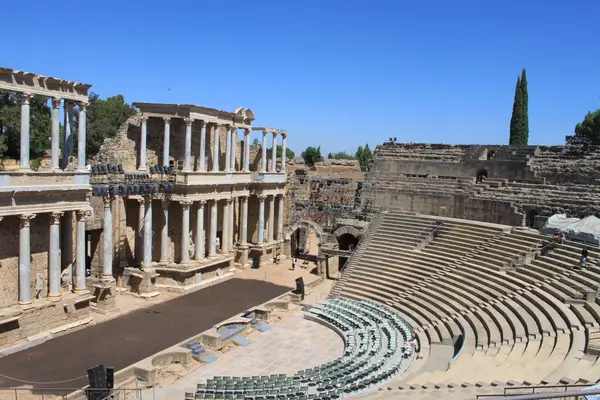
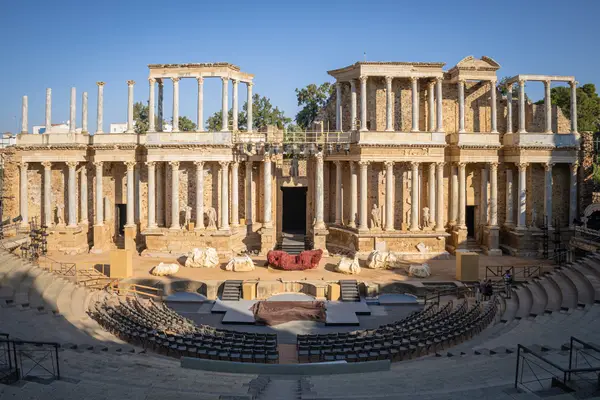
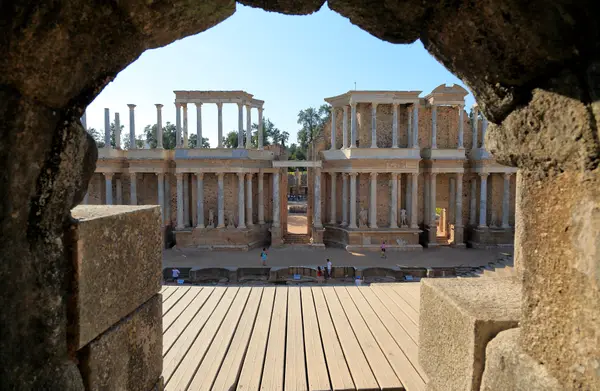
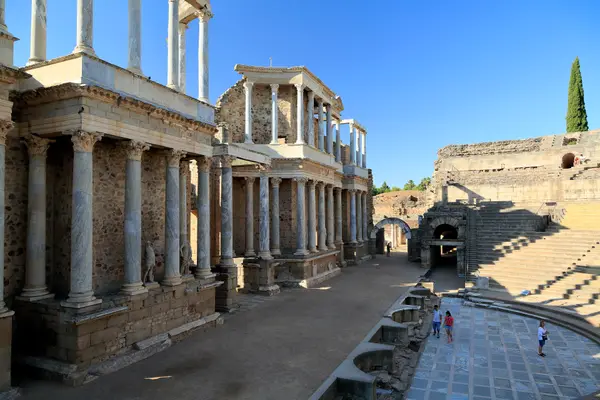
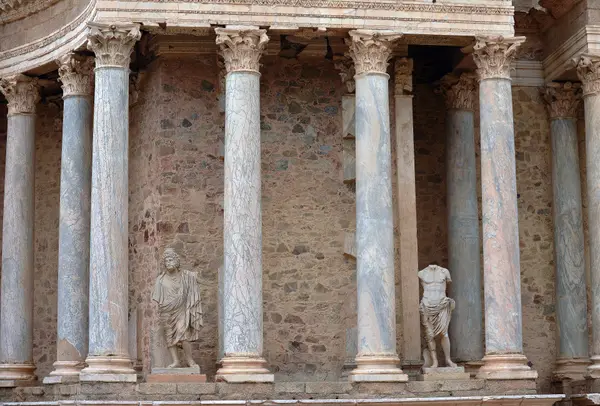
The Roman theatre of Mérida is one of the most emblematic monuments of Augusta Emerita and one of the best preserved in the Roman world. It was sponsored by the consul Marcus Vipsanius Agrippa, patronus coloniae, and opened between 16 and 15 BC. The building has a typically Roman plan with three well-defined zones: the semicircular cavea (86.63 m across, originally seating 6,000 spectators, today 3,086), the orchestra paved with white and blue-grey marble slabs, and the imposing scaena. The scaenae frons, the stage front, 17.5 m high and 63 m long, is articulated in two tiers of Corinthian columns with blue-grey marble shafts and white capitals, flanking three openings (the central valva regia and two lateral valvae hospitalia). Behind the stage opens a peristyle with a double granite colonnade. The theatre was altered in the Julio-Claudian or Flavian period (the rebuilding of the scaena) and under Constantine I (AD 333-337), and was abandoned in the 4th century. Modern excavation began in 1910 under José Ramón Mélida. Declared a national monument in 1912 and a UNESCO World Heritage site in 1993. Home of the Mérida International Classical Theatre Festival since 1933.
- Type
- Theatre
- Preservation
- Standing
- Protection
- Listed · RI-51-0000107
- Listed
- 13/12/1912
- Coordinates
- 38.91532, -6.33862
- Photographs
- 20
What it is and what is left
Where the finds are
Sculpture from the stage front: the semi-colossal figures of Ceres, a Muse, Venus and a possible Pluto (1st century AD), plus the statues of emperors and leading figures that occupied the lower tier of the stage. The Ceres has been connected with an allegory of Livia.
What each period left here
It reads downwards: each band is a period with fabric in this site, newest first, deepest last.
6 facts
8 photographs
Roman
This site has fabric from this period. Mérida has 57 more sites built in the same layer.
See the whole layer →Before it was excavated only a few centimetres of the upper seating showed, and the people of Mérida called them «The Seven Chairs»: a 16th-century legend had it they were the seats of seven Moorish kings who decided the city's fate there, with seven treasures hidden beneath.
Consorcio Ciudad Monumental de MéridaWhat people took for chairs were not seats at all: they were the collapsed vaults of the vomitoria, the passages by which the seating was reached.
Teatro romano de Mérida — WikipediaThe theatre became a theatre again on 18 June 1933, some 1,600 years after it closed: Seneca's «Medea» was staged in Unamuno's translation, with Margarita Xirgu in the lead and Cipriano de Rivas Cherif directing, before some 3,000 people, with Manuel Azaña, the prime minister, in the seats.
eldiario.es — 90 años de la primera «Medea»That performance was the start of the Mérida International Classical Theatre Festival, the oldest of its kind, and it came out of a gathering in December 1932 at the Teatro Español: Xirgu wanted to stage a classic by a Spanish author and Unamuno offered on the spot to translate one for her.
eldiario.es — 90 años de la primera «Medea»The theatre was not abandoned through ruin or an earthquake: it fell out of use in the 4th century, when Christianity became official in the Empire, because the new religion held theatrical performance to be immoral.
Teatro romano de Mérida — WikipediaTo mark the excavations Mélida began in 1910, the sculptor Rufino Mesa raised «The Seven Chairs of Mérida» in 2001: seven monoliths that hold, in the form of bronze books, the wish to know what lay beneath the chairs of the legend.
Consorcio Ciudad Monumental de Mérida
Below the deepest layer of each site is the ground itself: what has not been excavated yet, or what left nothing built. The catalogue only claims what is documented.
A short walk from here
Straight-line distances, worked out from the coordinates of each site.
Where this page comes from
- Teatro romano de Mérida - Wikipedia es.wikipedia.org
- La scaenae frons del teatro romano de Mérida - Dialnet dialnet.unirioja.es