Archaeological Ensemble of Mérida
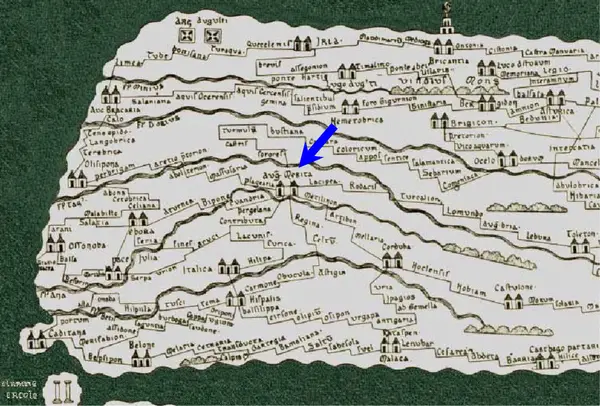
Augusta Emerita was founded in 25 BC by the emperor Augustus to settle the veterans (emeriti) of the legions V Alaudae and X Gemina after the Cantabrian Wars. Made capital of the Roman province of Lusitania, it was one of the most important cities in Hispania and the seat of imperial administration for the whole west of the peninsula.
- Type
- Conjunto arqueológico / Patrimonio Mundial UNESCO
- Preservation
- —
- Protection
- Listed · RI-53-0000148
- Listed
- 08/02/1973
- Coordinates
- 38.91559, -6.33832
- Photographs
- 3
What it is and what is left
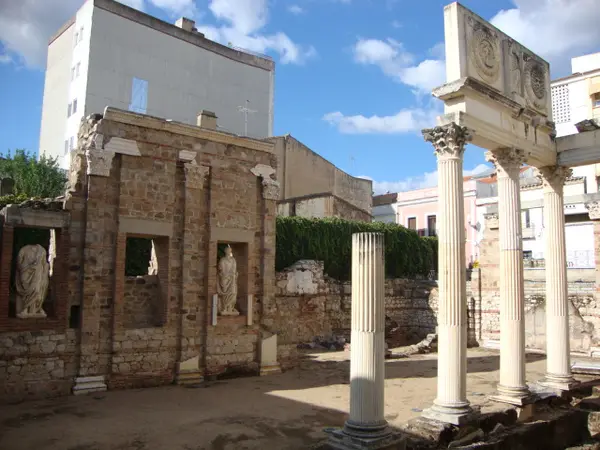
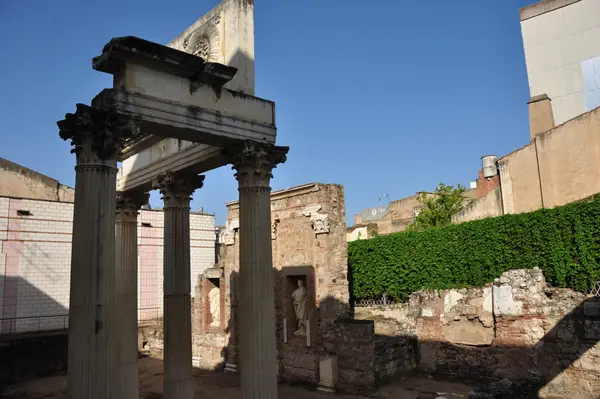
The Archaeological Ensemble of Mérida, declared a UNESCO World Heritage site in 1993 (criteria iii and iv), takes in more than 80 monuments across 36.87 hectares. Among the Roman remains are the Roman theatre (sponsored by Marcus Vipsanius Agrippa, 15-16 BC), the amphitheatre (8 BC), the circus, the Los Milagros and Rabo de Buey–San Lázaro aqueducts, the Arch of Trajan, the Temple of Diana, the Forum Portico, the Roman bridge over the Guadiana (the longest in the Roman world in its day), the Columbarios, the Casa del Mitreo with its celebrated cosmological mosaic, and the Proserpina and Cornalvo reservoirs. The ensemble also includes Visigothic remains (the basilica of Casa Herrera) and Islamic ones (the Arab alcazaba, AD 835).
The city was declared a Historic-Archaeological Ensemble in 1973. The Consorcio de la Ciudad Monumental de Mérida, set up in 1993, manages the conservation, presentation and outreach of the site. The National Museum of Roman Art (Rafael Moneo, 1986) holds one of the most important Hispano-Roman collections in Europe.
Where the finds are
The museum is the reference repository for archaeological material from Augusta Emerita: some 36,000 pieces — mosaics, sculpture, inscriptions and material culture — from excavations in the city and its territory.
What each period left here
It reads downwards: each band is a period with fabric in this site, newest first, deepest last.
2 facts
3 photographs
Roman
This site has fabric from this period. Mérida has 57 more sites built in the same layer.
See the whole layer →The UNESCO listing has an exact date: 11 December 1993, under criteria (iii) and (iv), as an outstanding example of Roman imperial public building and exceptional testimony to a decisive stage in the history of Spain.
Ministerio de Cultura — Patrimonio Mundial: Conjunto Arqueológico de MéridaWhat is listed is not «the city»: it is 29 specific elements spread across the town and its surroundings, adding up to 36.87 hectares and including, besides the Roman remains, singular buildings of the Visigothic and Muslim periods.
Conjunto arqueológico de Mérida — Wikipedia
Below the deepest layer of each site is the ground itself: what has not been excavated yet, or what left nothing built. The catalogue only claims what is documented.
A short walk from here
Straight-line distances, worked out from the coordinates of each site.
Where this page comes from
- Consorcio Ciudad Monumental de Mérida - Conjunto Monumental consorciomerida.org
- Wikipedia - Conjunto arqueológico de Mérida es.wikipedia.org