Columbarios funerary area
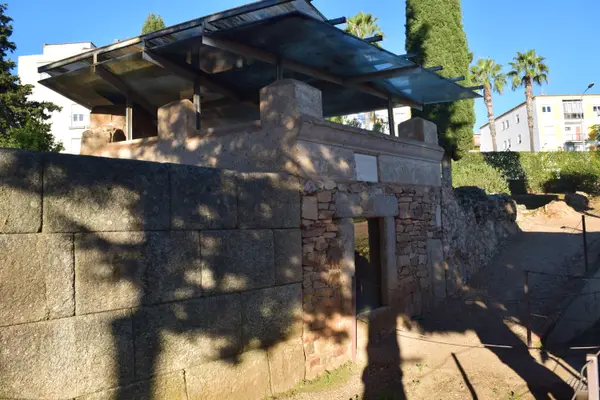
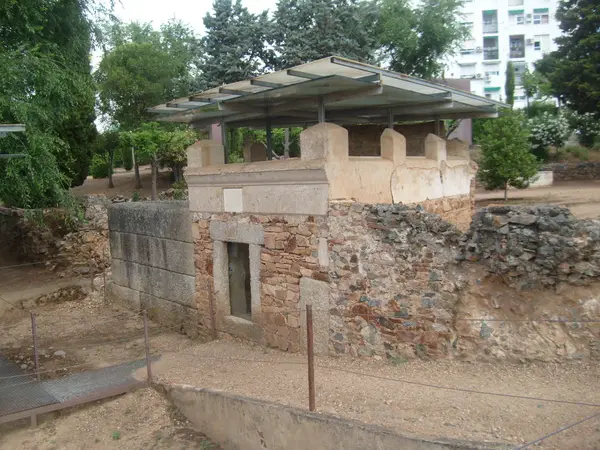
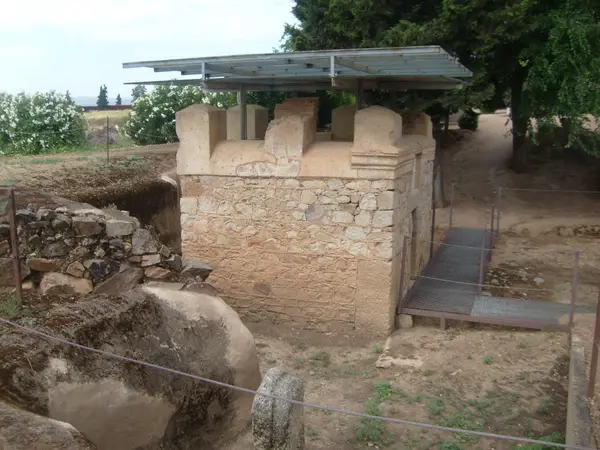
The Columbarios funerary area is one of the most important and best preserved Roman burial complexes of the old Augusta Emerita (Mérida). Standing outside the walls beside the southern road towards Córdoba, the columbaria are two family cremation mausolea belonging to the Voconii and the Julii, dated to the second half of the 1st century AD.
- Type
- Necropolis
- Preservation
- Ruined
- Protection
- Listed · RI-53-0000148
- Listed
- 08/02/1973
- Coordinates
- 38.91238, -6.33878
- Photographs
- 16
What it is and what is left
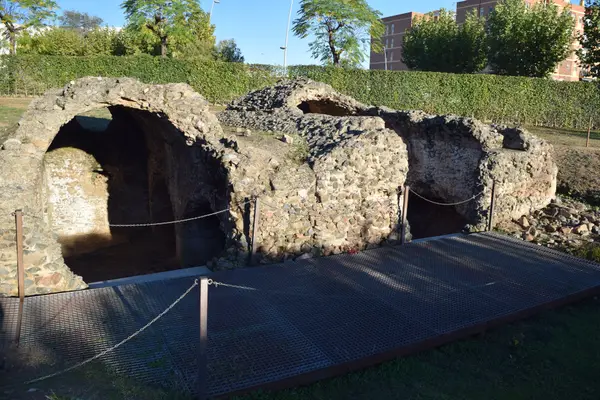
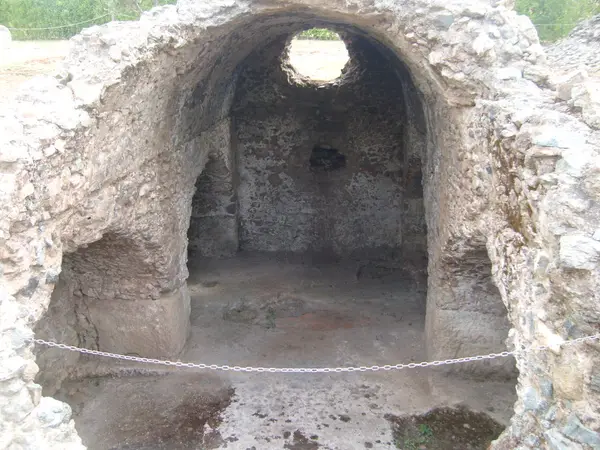
The complex comprises two main roofless buildings, built in rubble masonry and granite ashlar. The mausoleum of the Julii is trapezoidal in plan and the larger of the two; that of the Voconii, square and smaller, preserves wall paintings with funerary portraits of the family and an inscription alluding to military honours. Further south are two semi-underground mausolea with barrel vaults in opus caementicium, reached by a flight of steps, with arcosolia for the cinerary urns.
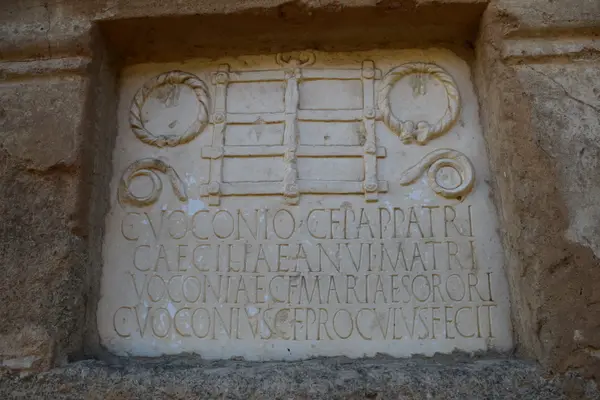
The surviving inscriptions identify Gaius Voconius Proculus as the patron of the family mausoleum, and Gaius Julius Felix as the owner of the second. Excavation began in 1927 and the site forms part of the Archaeological Ensemble of Mérida, declared a UNESCO World Heritage site in 1993. The area now includes an open-air interpretation centre on Roman funerary rites and is run by the Consorcio de la Ciudad Monumental de Mérida.
Where the finds are
The family funerary enclosures (among them those of the Voconii and the Julii), with their stelae and fittings, are preserved on site, now roofed and presented as a museum.
What each period left here
It reads downwards: each band is a period with fabric in this site, newest first, deepest last.
6 facts
8 photographs
Roman
This site has fabric from this period. Mérida has 57 more sites built in the same layer.
See the whole layer →Excavation began in 1927, and they have been known as «Los Columbarios» ever since: the name they carry on the city map is the one archaeology gave them, not the one they had at the time.
Consorcio Ciudad Monumental de MéridaWe know the name, the origin and the social standing of the two families buried here — the Voconii and the Julii — because they left it in writing: the inscriptions survive in both buildings.
Consorcio Ciudad Monumental de MéridaIn the adjoining garden are 4th-century funerary buildings the city calls the «Bodegones» or the «tinsmith's cave»: in the mid-20th century they served as a home for a family of tinsmiths.
Consorcio Ciudad Monumental de MéridaMélida and Macías brought them to light in 1926-1927, but systematic archaeology on the site did not arrive until 1997: the exterior in that first phase, the interior in 1999 and the interpretation modules in 2002. Seventy years of waiting between the find and the study.
Asturnatura — Columbarios romanos de MéridaThe paintings in the mausoleum of the Voconii do not portray only the deceased: they also portray the dedicant, the person who paid for the monument. Both ended up on the wall.
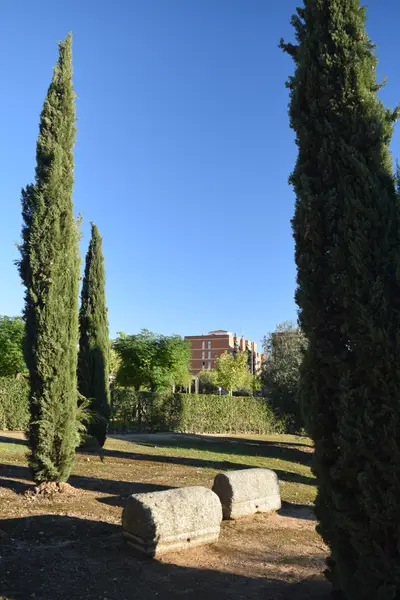
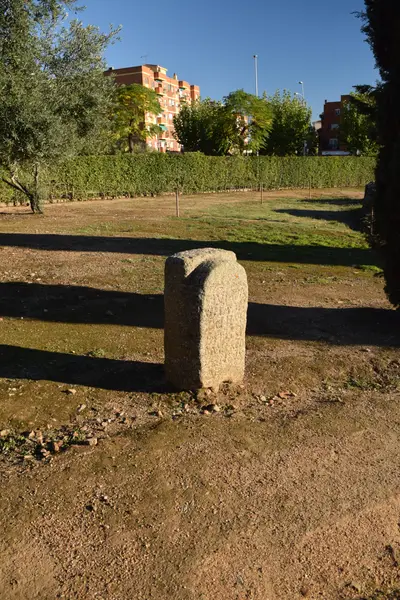
Asturnatura — Columbarios romanos de MéridaYou reach it from the Casa del Mitreo along a long corridor lined with cypresses that opens into a space where the different Roman funerary rites are explained: the route is laid out like a street of tombs.
Asturnatura — Columbarios romanos de Mérida
Below the deepest layer of each site is the ground itself: what has not been excavated yet, or what left nothing built. The catalogue only claims what is documented.
A short walk from here
Straight-line distances, worked out from the coordinates of each site.
Where this page comes from
- Área Funeraria de los Columbarios – Consorcio Ciudad Monumental de Mérida consorciomerida.org
- Columbarios Romanos – Turismo Extremadura turismoextremadura.com
- Conjunto Arqueológico de Mérida – Wikipedia es.wikipedia.org
- Columbarios Romanos de Mérida – Visitar Mérida visitarmerida.info